Design a Scalable Battery-Swapping Ecosystem for Grab Drivers

2020-2021

Connecting the driver app, cabinet hardware, voice guidance, and operational tools to support GrabWheels' Viar fleet in Jakarta.

Service Design

Multi-device UX

Hardware UX

Voice UX

ROLE

Product Designer

SCOPE

Research, service flow, interaction design, voice/content, user testing

PLATFORM

Driver app, battery cabinet, voice interface, ops tools

TIMELINE

2021 - 2022

An illustrative sketch of a flower

Overview

200+ million users across Southeast Asia 5 million+ registered drivers

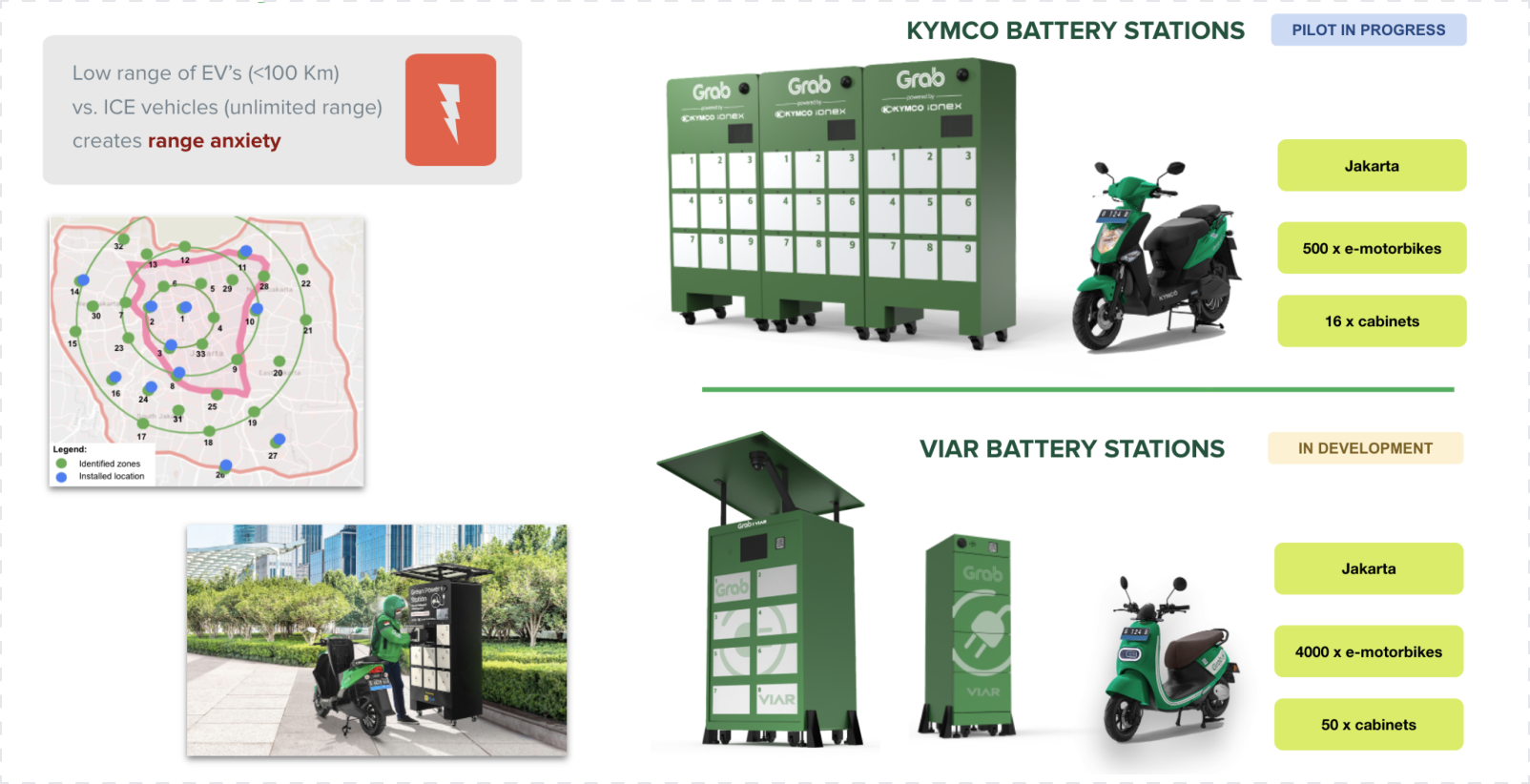
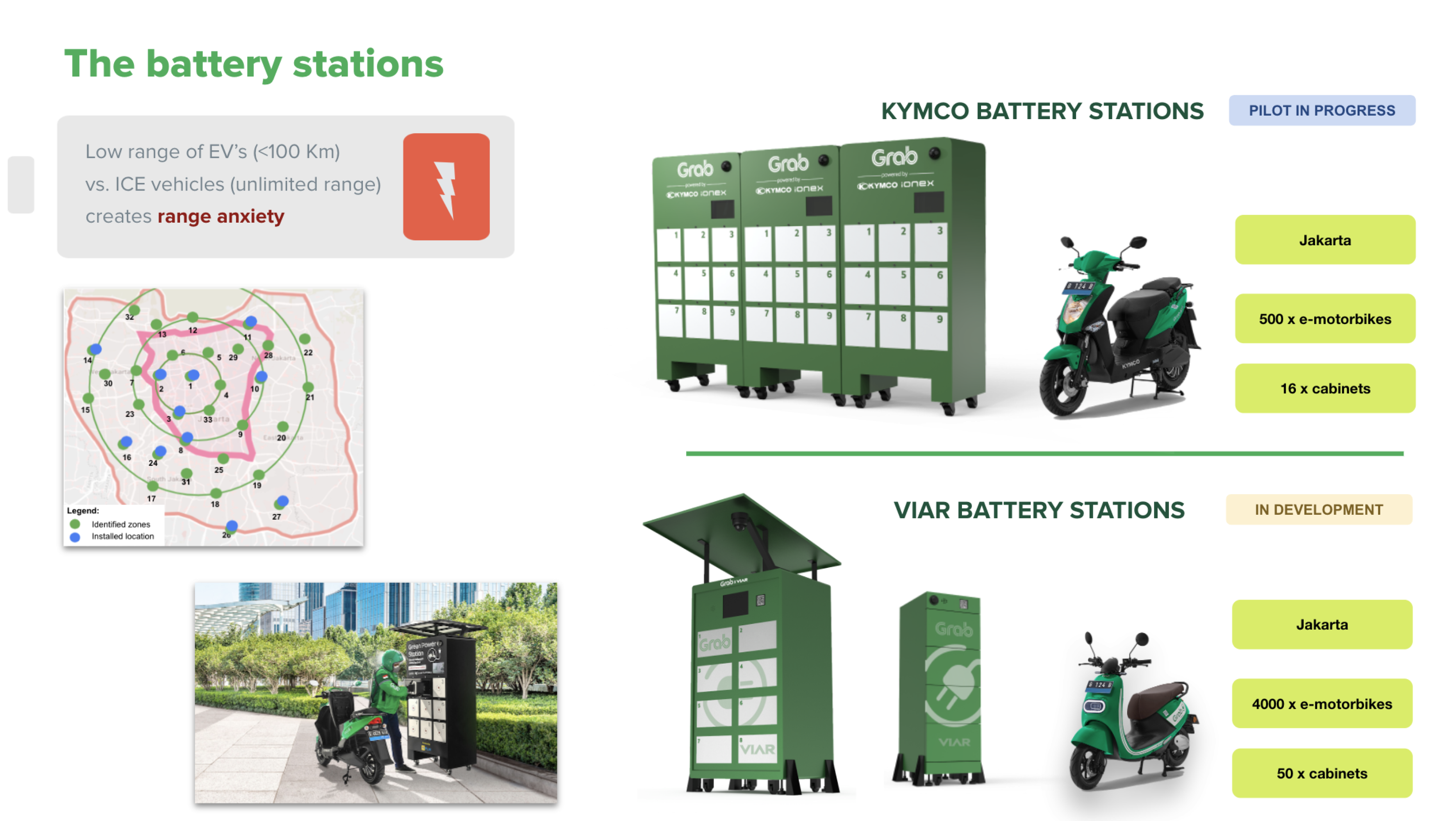
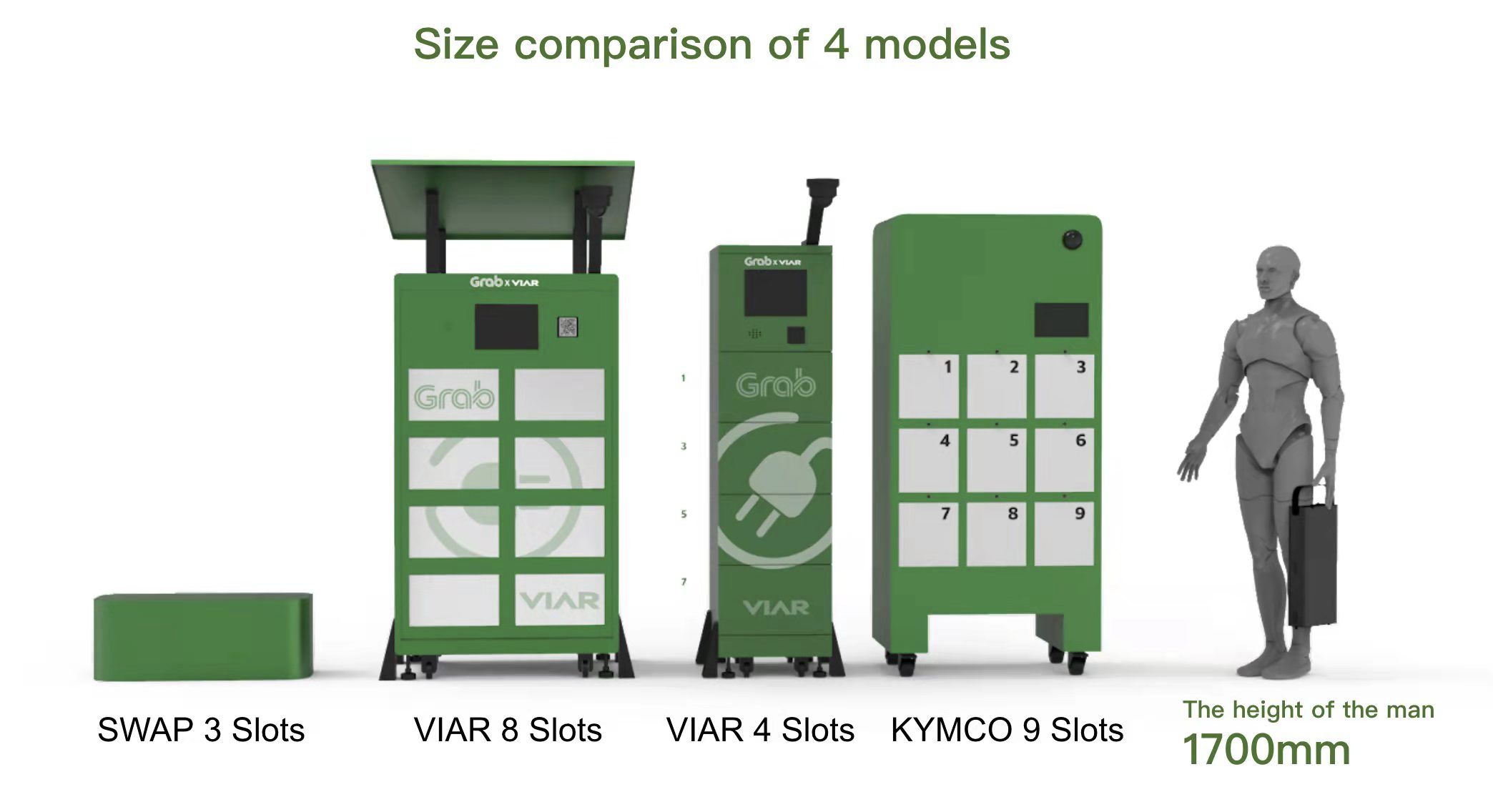
GrabWheels was preparing to expand battery swapping from an existing Kymco pilot to its much larger Viar fleet in Jakarta. I designed the end-to-end swapping experience across the driver app, 8-slot cabinet screens, screenless 4-slot cabinets, voice guidance, and operational tools. The goal was to help drivers find available batteries and complete a physical swap quickly and confidently, while accommodating different cabinet capabilities and operational constraints.

The Context

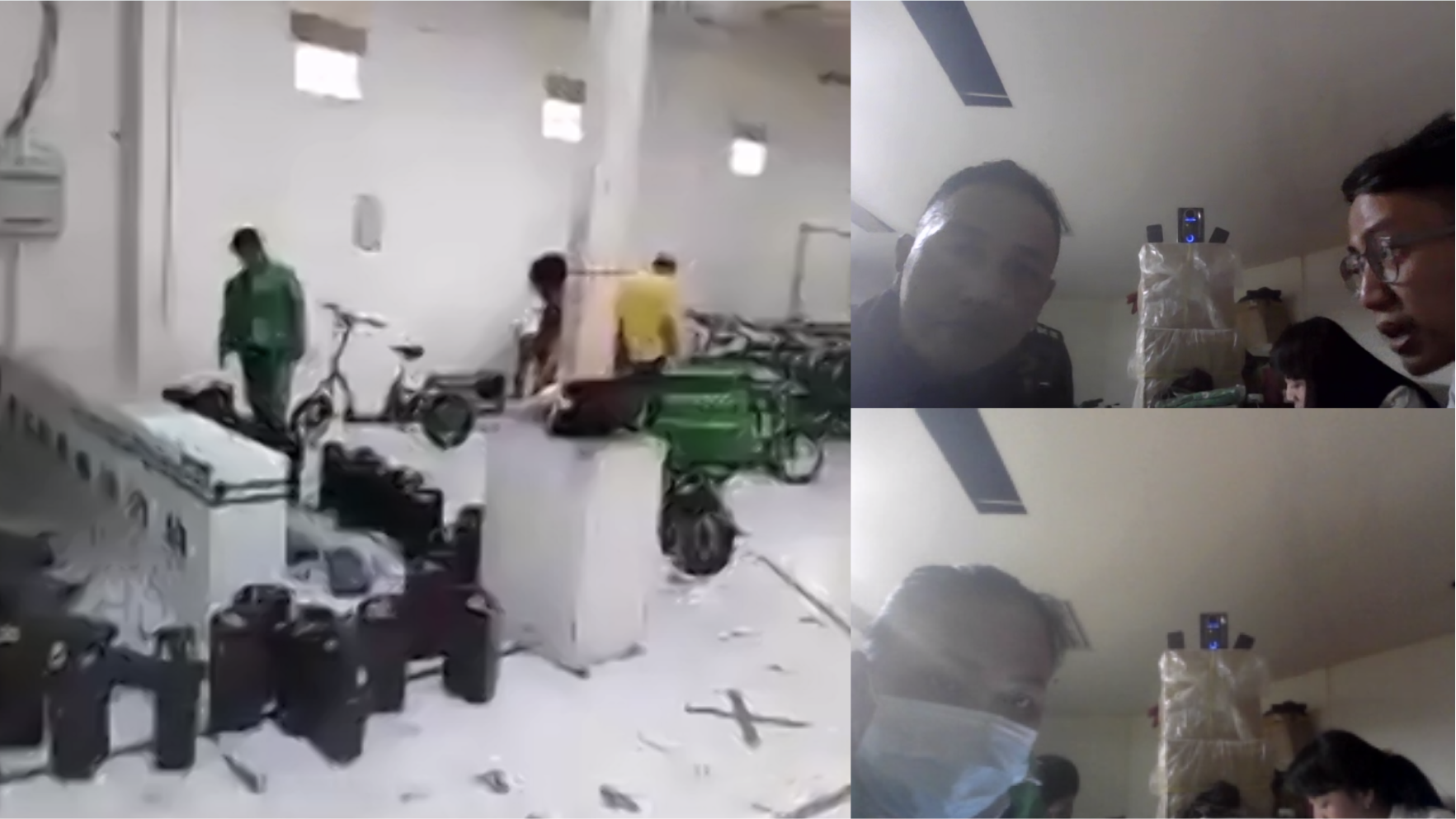
Battery availability directly affected drivers' ability to work. Grab's delivery, Mart, and Express drivers depended on electric motorcycles throughout their working day. Before the Viar battery-swapping service, drivers primarily relied on Grab shelters or charging batteries at home. These options required additional travel or waiting time.
80%

Fleet used Viar New Q1 vehicles

2.8

Avg batteries needed per day

45%

Felt uncomfortable traveling far due to battery range

46%

Struggled to find a place to swap or charge

Battery range dissatisfaction was associated with driver churn. A reliable swapping experience was critical to fleet utilization and operational stability.

My Role

I worked with the product manager to shape business strategy and collaborated local operations teams in Indonesia to study user workflows. I led the digital product design across six device platforms and worked with hardware designers to improve IoT connectivity and user experience. My responsibilities included user research, prototyping, visual design, Lottie animations, and user testing.

The Context

Battery availability directly affected drivers' ability to work. Grab's delivery, Mart, and Express drivers depended on electric motorcycles throughout their working day. Before the Viar battery-swapping service, drivers primarily relied on Grab shelters or charging batteries at home. These options required additional travel or waiting time.
Battery range dissatisfaction was associated with driver churn. A reliable swapping experience was critical to fleet utilization and operational stability.

Problem

Driver-partners rely on their vehicles to earn a living. Uncertainty around battery range, cabinet availability, and swap status can force them to interrupt work early, spend additional time looking for an available battery, or risk being stranded.

Battery swapping should reduce this range anxiety, but fragmented interactions across the driver app, cabinet hardware, and operational systems can introduce a new layer of uncertainty during the swap itself.
Design Challenge

How might we make every swap feel clear, reliable, and recoverable?

Designing reliability into every handoff

.The swap succeeds only when driver intent, physical states, and system confirmation stay aligned.

Help users start faster

Add two entrances for users on the My Vehicle page and the Cabinet Map page

How to do user education?

We add guidance to help users quickly learn how to swap the battery.

Online: Automatically show this info for first-time users.

Offline: After scanning the cabinet QR code, the cabinet screen shows the user how to return the battery and displays guidance before the user gets a new battery

More work is available upon request.

Feel free to get in touch to see additional case studies.

Design a Scalable Battery-Swapping Ecosystem for Grab Drivers

2020-2021

Connecting the driver app, cabinet hardware, voice guidance, and operational tools to support GrabWheels' Viar fleet in Jakarta.

Service Design

Multi-device UX

Hardware UX

Voice UX

ROLE

Product Designer

SCOPE

Research, service flow, interaction design, voice/content, user testing

PLATFORM

Driver app, battery cabinet, voice interface, ops tools

TIMELINE

2021 - 2022

An illustrative sketch of a flower

Overview

200+ million users across Southeast Asia 5 million+ registered drivers

GrabWheels was preparing to expand battery swapping from an existing Kymco pilot to its much larger Viar fleet in Jakarta. I designed the end-to-end swapping experience across the driver app, 8-slot cabinet screens, screenless 4-slot cabinets, voice guidance, and operational tools. The goal was to help drivers find available batteries and complete a physical swap quickly and confidently, while accommodating different cabinet capabilities and operational constraints.

The Context

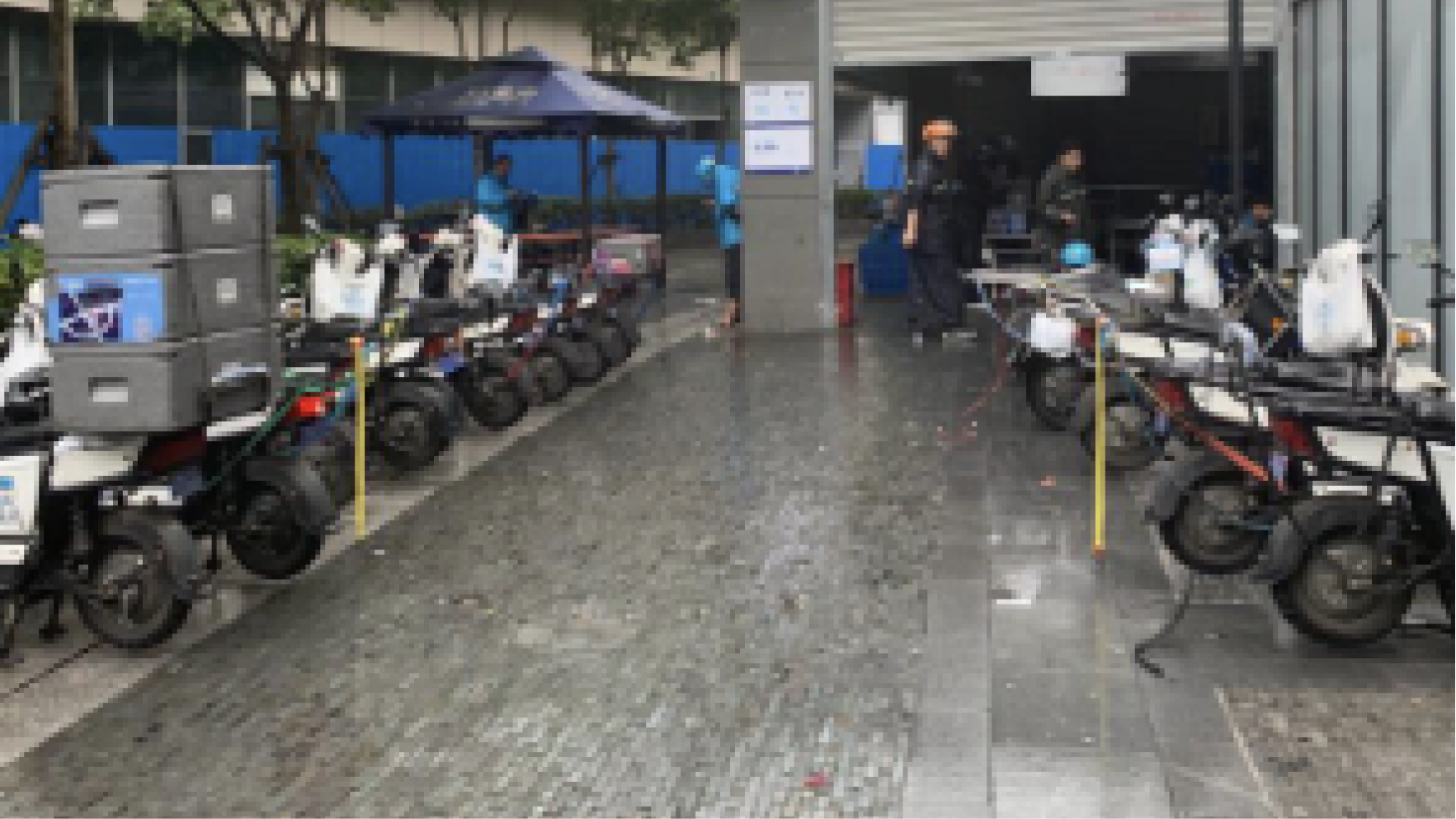
Battery availability directly affected drivers' ability to work. Grab's delivery, Mart, and Express drivers depended on electric motorcycles throughout their working day. Before the Viar battery-swapping service, drivers primarily relied on Grab shelters or charging batteries at home. These options required additional travel or waiting time.

80%

Fleet used Viar New Q1 vehicles

2.8

Avg batteries needed per day

45%

Felt uncomfortable traveling far due to battery range

46%

Struggled to find a place to swap or charge

Battery range dissatisfaction was associated with driver churn. A reliable swapping experience was critical to fleet utilization and operational stability.

My Role

I worked with the product manager to shape business strategy and collaborated local operations teams in Indonesia to study user workflows. I led the digital product design across six device platforms and worked with hardware designers to improve IoT connectivity and user experience. My responsibilities included user research, prototyping, visual design, Lottie animations, and user testing.

The Context

Battery availability directly affected drivers' ability to work. Grab's delivery, Mart, and Express drivers depended on electric motorcycles throughout their working day. Before the Viar battery-swapping service, drivers primarily relied on Grab shelters or charging batteries at home. These options required additional travel or waiting time.

Battery range dissatisfaction was associated with driver churn. A reliable swapping experience was critical to fleet utilization and operational stability.

Problem

Driver-partners rely on their vehicles to earn a living. Uncertainty around battery range, cabinet availability, and swap status can force them to interrupt work early, spend additional time looking for an available battery, or risk being stranded.

Battery swapping should reduce this range anxiety, but fragmented interactions across the driver app, cabinet hardware, and operational systems can introduce a new layer of uncertainty during the swap itself.
Design Challenge

How might we make every swap feel clear, reliable, and recoverable?

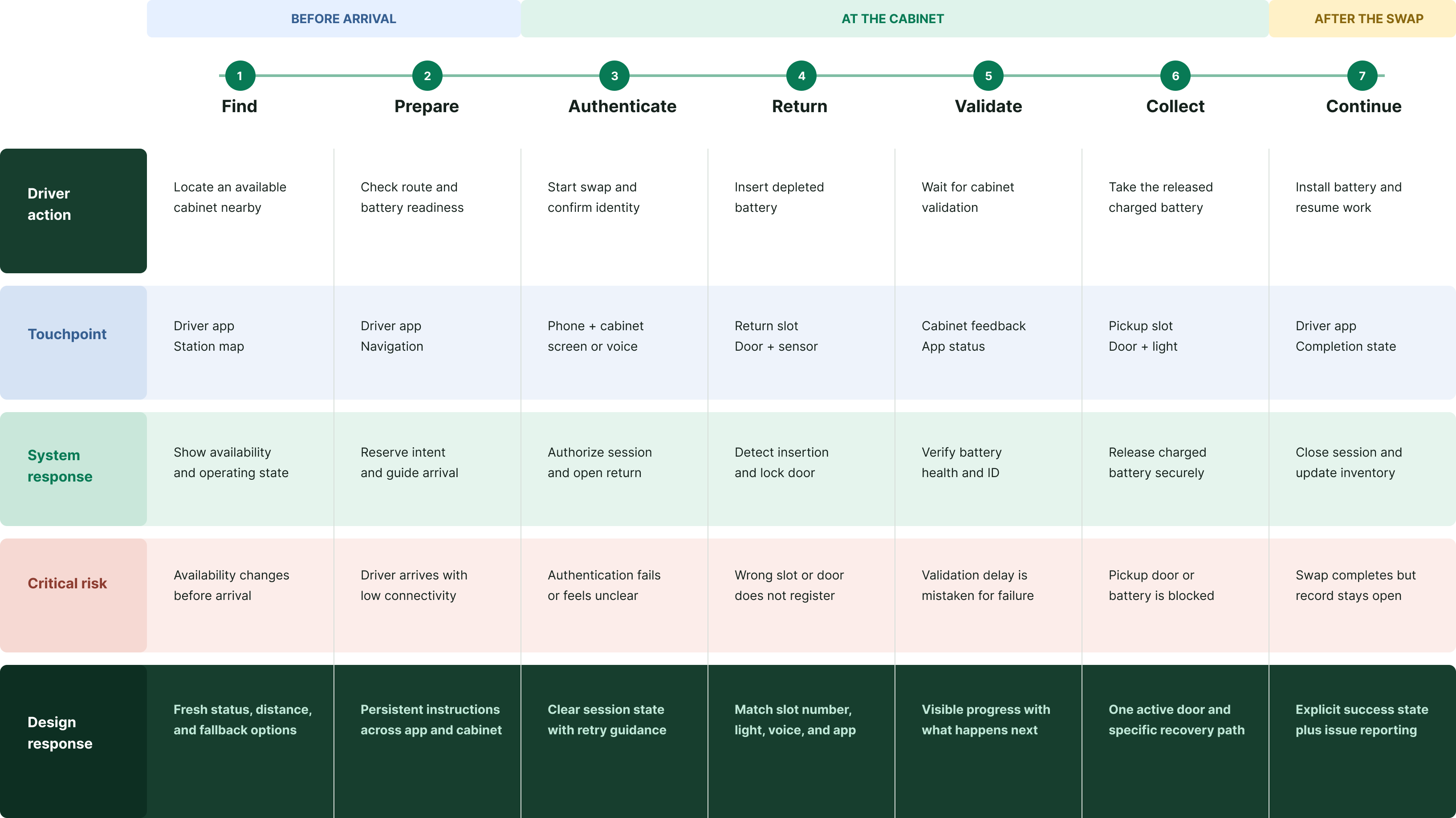
Designing reliability into every handoff

.The swap succeeds only when driver intent, physical states, and system confirmation stay aligned.
Help users start faster

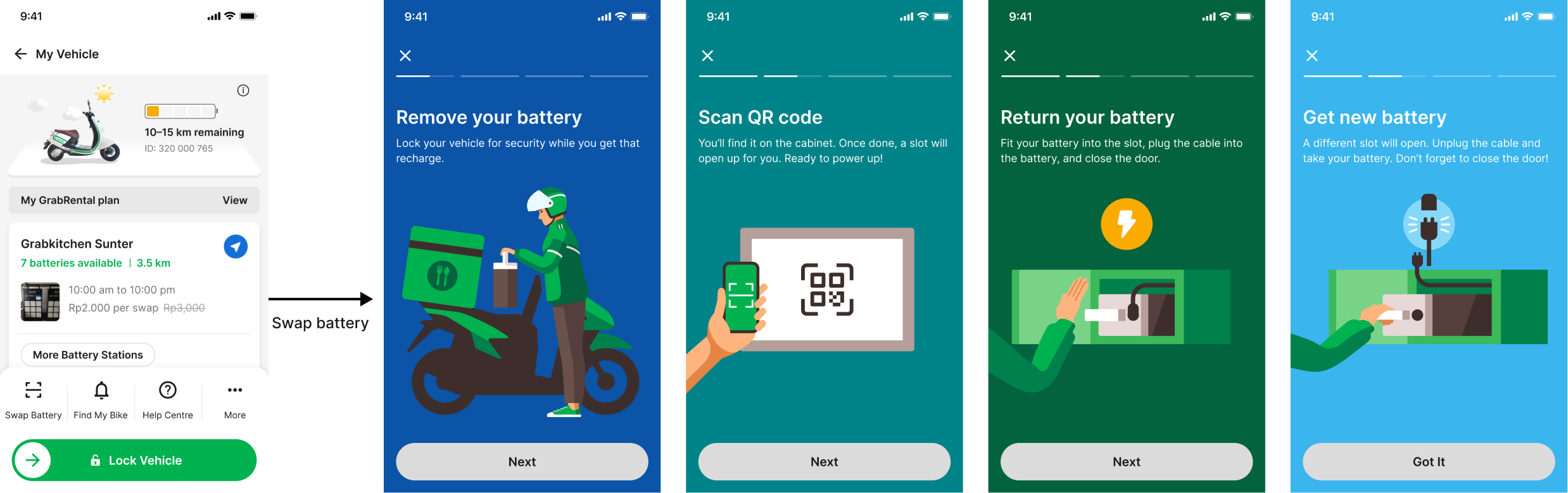
Add two entrances for users on the My Vehicle page and the Cabinet Map page
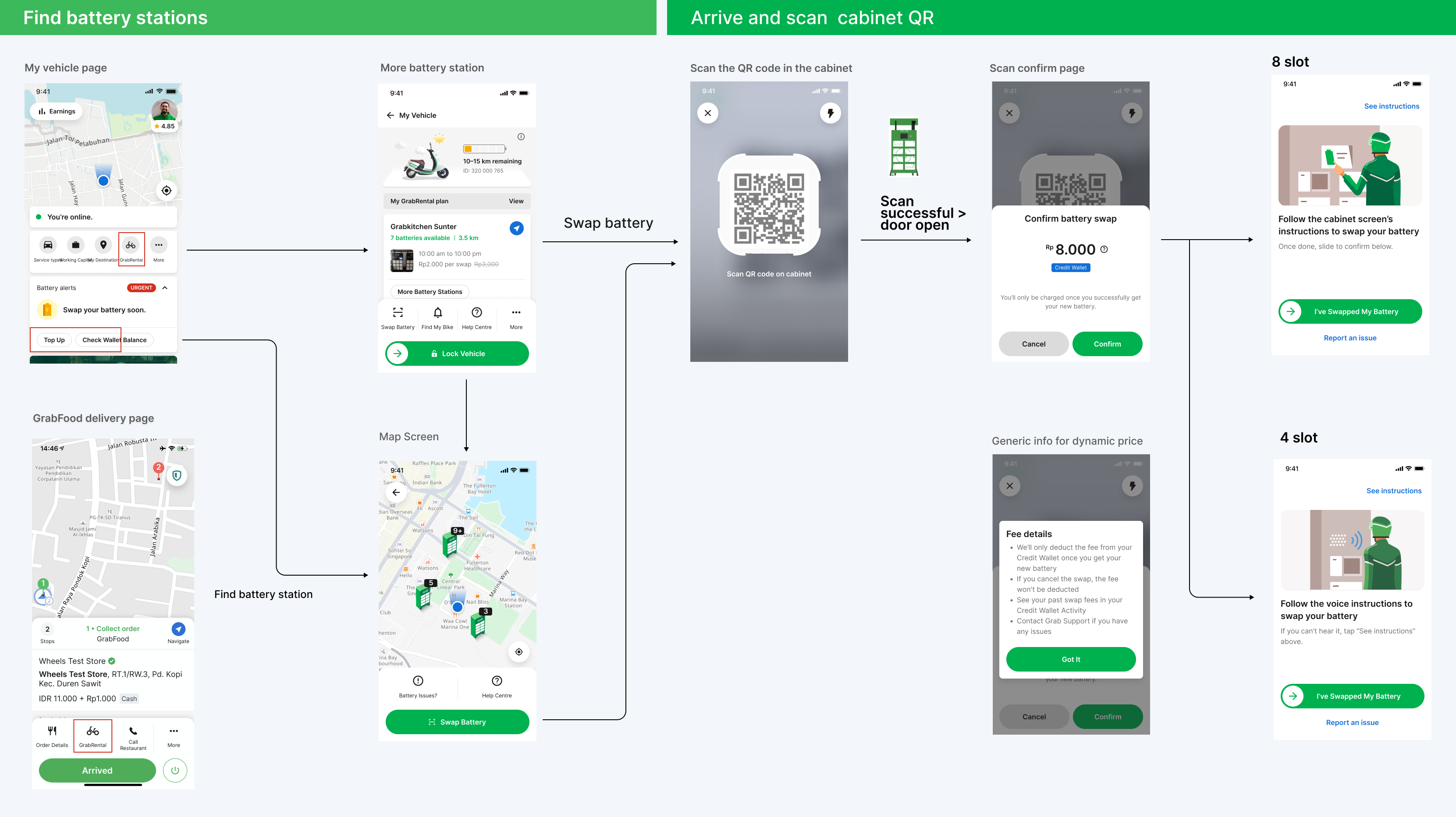
How to do user education?

We add guidance to help users quickly learn how to swap the battery.

Online: Automatically show this info for first-time users.
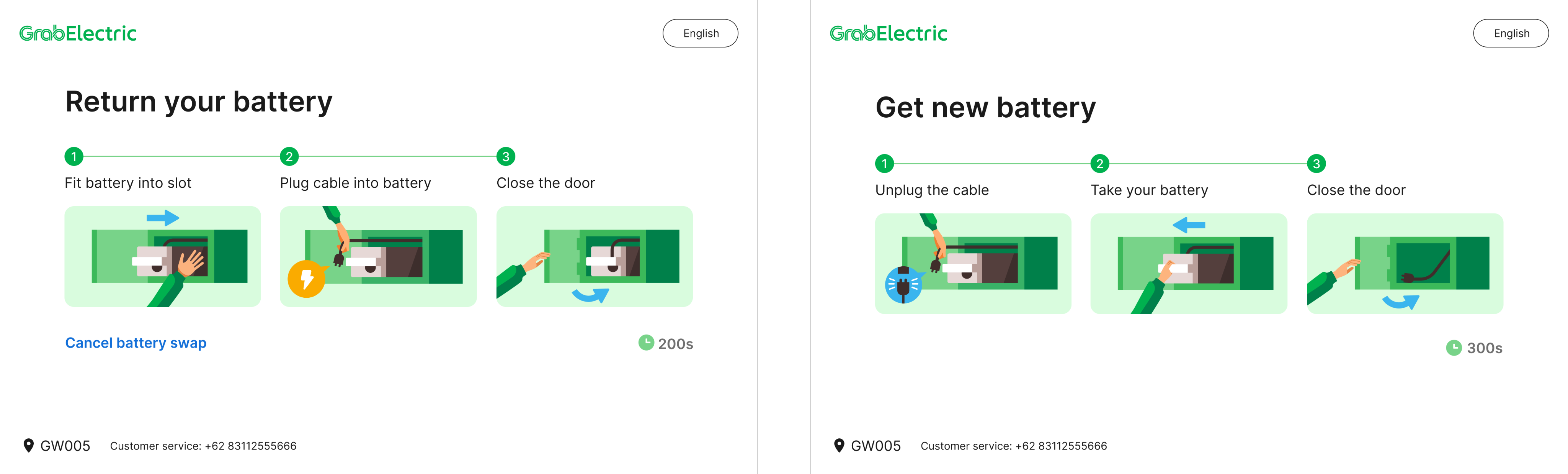
Offline: After scanning the cabinet QR code, the cabinet screen shows the user how to return the battery and displays guidance before the user gets a new battery
More work is available upon request.

Feel free to get in touch to see additional case studies.

Design a Scalable Battery-Swapping Ecosystem for Grab Drivers

2020-2021

Connecting the driver app, cabinet hardware, voice guidance, and operational tools to support GrabWheels' Viar fleet in Jakarta.

Service Design

Multi-device UX

Hardware UX

Voice UX

ROLE

Product Designer

SCOPE

Research, service flow, interaction design, voice/content, user testing

PLATFORM

Driver app, battery cabinet, voice interface, ops tools

TIMELINE

2021 - 2022

An illustrative sketch of a flower

Overview

200+ million users across Southeast Asia 5 million+ registered drivers

GrabWheels was preparing to expand battery swapping from an existing Kymco pilot to its much larger Viar fleet in Jakarta. I designed the end-to-end swapping experience across the driver app, 8-slot cabinet screens, screenless 4-slot cabinets, voice guidance, and operational tools. The goal was to help drivers find available batteries and complete a physical swap quickly and confidently, while accommodating different cabinet capabilities and operational constraints.

The Context

Battery availability directly affected drivers' ability to work. Grab's delivery, Mart, and Express drivers depended on electric motorcycles throughout their working day. Before the Viar battery-swapping service, drivers primarily relied on Grab shelters or charging batteries at home. These options required additional travel or waiting time.

80%

Fleet used Viar New Q1 vehicles

2.8

Avg batteries needed per day

45%

Felt uncomfortable traveling far due to battery range

46%

Struggled to find a place to swap or charge

Battery range dissatisfaction was associated with driver churn. A reliable swapping experience was critical to fleet utilization and operational stability.

My Role

I worked with the product manager to shape business strategy and collaborated local operations teams in Indonesia to study user workflows. I led the digital product design across six device platforms and worked with hardware designers to improve IoT connectivity and user experience. My responsibilities included user research, prototyping, visual design, Lottie animations, and user testing.

The Context

Battery availability directly affected drivers' ability to work. Grab's delivery, Mart, and Express drivers depended on electric motorcycles throughout their working day. Before the Viar battery-swapping service, drivers primarily relied on Grab shelters or charging batteries at home. These options required additional travel or waiting time.

Battery range dissatisfaction was associated with driver churn. A reliable swapping experience was critical to fleet utilization and operational stability.

Problem

Driver-partners rely on their vehicles to earn a living. Uncertainty around battery range, cabinet availability, and swap status can force them to interrupt work early, spend additional time looking for an available battery, or risk being stranded.

Battery swapping should reduce this range anxiety, but fragmented interactions across the driver app, cabinet hardware, and operational systems can introduce a new layer of uncertainty during the swap itself.

Design Challenge

How might we make every swap feel clear, reliable, and recoverable?

Designing reliability into every handoff

.The swap succeeds only when driver intent, physical states, and system confirmation stay aligned.

Help users start faster

Add two entrances for users on the My Vehicle page and the Cabinet Map page

How to do user education?

We add guidance to help users quickly learn how to swap the battery.

Online: Automatically show this info for first-time users.

Offline: After scanning the cabinet QR code, the cabinet screen shows the user how to return the battery and displays guidance before the user gets a new battery

More work is available upon request.

Feel free to get in touch to see additional case studies.